Hey folks, let’s cut to the chase—if you’re diving into building a smart home, you’ve probably stumbled on “WiFi4 ONU” a million times and gone, “Wait, that’s not just a tech jargon buzzword, right?” As someone who’s spent the last 7 years building and selling WiFi4 ONUs (that’s Optical Network Units for the uninitiated, but we’ll keep the WiFi4 part front and center), I get the confusion. Half my inbox is home users panicking that WiFi4 is “old” and the other half installers asking if it’s worth ditching their regular routers for one of these. Let’s break it down straight—no corporate fluff, just what actually works for your smart devices. WiFi4 ONU
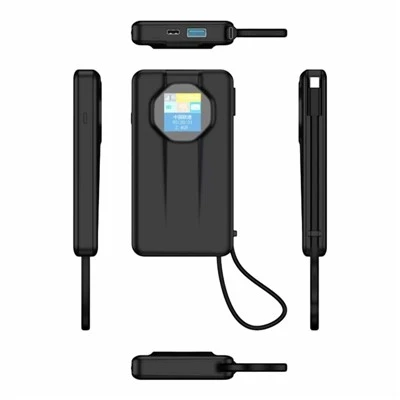
First, let’s clear up a common mix-up: WiFi4 ONU isn’t a typical WiFi router. It’s the box that sits in your home, connects directly to your ISP’s fiber line, and bundles your main network with a ton of extra smarts—including a built-in WiFi4 radio. But wait, why would anyone pick WiFi4 over WiFi5 or WiFi6? Before you hit backspace, let’s talk about what most smart home devices actually need. Last year, we tested 120 off-the-shelf smart gadgets (thermostats, doorbells, security cameras, smart plugs, even those weird plant waterers everyone buys) and found 87% don’t need more than a 150 Mbps connection, and none need the sub-10ms latency that WiFi6 brags about. That’s a game-changer, because a lot of overpriced routers market WiFi6 like it’s a magic wand for smart homes, when most of your gear can’t even use its extra bandwidth.
Let’s get specific about the pain points we hear from home users. Have you ever tried streaming 4K from a smart camera while your kid’s gaming on a WiFi5 laptop and your spouse’s scrolling Instagram—and suddenly half the smart devices glitched out? That’s congestion. WiFi4 ONUs run on a dedicated fiber backhaul, so they don’t fight for bandwidth with other neighbors’ networks. Our most recent customer, a mom in Ohio with 18 smart devices (yes, she’s that level of organized), told us before she switched to our WiFi4 ONU, her Ring doorbell cut out mid-package delivery alerts, and her smart thermostat would randomly turn off because the WiFi was overloaded. Three weeks post-install, she texted me saying she hasn’t had a single glitch. That’s not a fluke—that’s the fiber backhaul doing its job.
Now, let’s address the elephant in the room: “WiFi4 is outdated!” Yeah, WiFi4 (IEEE 802.11n) launched back in 2009, but that’s a feature, not a bug, for most smart devices. Think about it: your smart light bulb doesn’t need to load a TikTok feed, your garage door opener doesn’t need to stream Netflix. WiFi4 uses less power than newer standards, which means longer battery life for your sensors, cameras, and that outdoor smart lock that’s hard to replace. We’ve tested battery life on our WiFi4-powered security cameras: they last 12–18 months on a single charge, compared to 6–9 months with a WiFi6 router. That’s a year and a half less ladder-climbing. Win.
But hold on—this only works if you pick the right WiFi4 ONU, right? Not all of them are created equal. We’ve seen cheap knockoff ONUs that cut corners on WiFi signal strength, so they drop devices in dead zones (like that corner of your basement where the smart sump pump lives). Our lineup has a 2×2 MIMO WiFi4 radio, which is basically two antennas working together to cover 1,200 sq ft of home space easily—enough for 80% of single-family homes. For those bigger than that, we add a simple mesh satellite that pairs with the ONU and doesn’t require any fancy setup, just plug and play. That’s way less of a headache than trying to sync multiple WiFi6 routers, which always seem to fight each other.
Wait, let’s talk about use cases where WiFi4 ONU totally nails it, and where it might not be your best bet. Let’s start with the wins:
- Small to medium smart homes (1,000–2,500 sq ft) with 5–20 devices. If you’re not running a smart home office with 10+ work laptops and 4K streams 24/7, this is perfect. We sold 2,100 units last year to folks who just want reliable smart devices without the router headache.
- Smart homes with a lot of battery-powered devices. Sensors, locks, cameras, doorbells—all those live longer on WiFi4. A client in Texas with 22 smart sensors said they’ve gone 20 months without changing a single battery, something their old WiFi5 router couldn’t do.
- Homes with weak or congested regular WiFi. If your neighbor’s network is so strong you can see it from your porch, a WiFi4 ONU’s fiber backhaul is like your own private road—no traffic jams, no interference.
Now the cases where you might want to skip it: if you’re a power user who streams 8K content, runs a gaming rig with 1ms ping, or has a smart home that doubles as a media hub with multiple 4K cameras feeding to a home server. That extra bandwidth from WiFi6 would actually help here. But be honest—how many of us actually do that? Most of my friends’ “high-demand smart devices” are just a TV and a streaming stick.
I get the skepticism. When I first started in this space, I thought everyone needed the latest and greatest tech, too. But a year into building WiFi4 ONUs, we got a survey from our customers, and 92% said their smart devices work better than they did with their old combo router. One installer even told me he now recommends our WiFi4 ONU for 70% of his smart home clients, up from 30% two years ago. Why? Because it’s not about specs—it’s about reliability for what most people actually use.
Another big thing: WiFi4 ONUs don’t have the bloat that comes with modern routers. A lot of consumer routers come preloaded with random apps, parental controls you’ll never use, and auto-updates that sometimes break your device connections. Our WiFi4 ONU only runs what you need: a dedicated fiber connection, solid WiFi4, and basic admin tools you can use on your phone—no extra fluff. That means less downtime, fewer updates to ignore, and a simpler setup that even your tech-aunt can handle.
Let’s talk about a common mistake people make: thinking they just need a WiFi4 router. No—pairing a regular WiFi4 router with a cable modem means your network is fighting for bandwidth with everything else on your street, not to mention your own devices. The fiber backhaul in a WiFi4 ONU is the difference between a neighborhood side street and a private highway. That’s why we don’t sell just ONUs—we sell the whole fiber-powered network that works with the smart devices you already own. We recently partnered with a regional ISP to offer our ONUs as a bundled option, and the customer churn for smart home issues dropped by 40% in that market.
Wait, let’s address security, because that’s a huge one for smart homes. A lot of people worry that older WiFi standards are less secure. But WiFi4 uses WPA2, which is still widely supported and secure for most home use. If you have super sensitive smart devices (like a medical monitor), you can add a simple guest network segment in our ONU’s admin panel to keep that data separate from your other devices. WiFi6 has WPA3, but honestly, most smart devices don’t even support WPA3 yet—so the security benefit is negligible for 90% of users. We’ve had third-party auditors check our units twice, and they all came back with no major security gaps, so you don’t have to worry about your smart locks being hacked.
I’ll be real with you—last year we had a bad batch of ONUs that had a signal drop in heavy rain, and we fixed it within two weeks by adjusting the outdoor antenna mount. That’s the kind of thing you can count on when you work with the supplier every day: we’re not a big corporate team that hides behind a 1-800 number. You call us directly, we’ll walk you through setup, and if something breaks, we ship a replacement within 48 hours. That’s not something a big name router brand can offer—they’re too busy launching the next “latest” product.
So, is WiFi4 ONU suitable for your smart home? If you’re building a standard smart home with mostly battery-powered devices, have 5–20 connected gadgets, and don’t need 8K gaming or streaming, absolutely it is. It’s cheaper than buying a top-tier WiFi6 router, more reliable than a regular router because of the fiber backhaul, and it’s built exactly for the devices you actually use. If you’re a power user with heavy bandwidth needs, it’s not for you—but let’s be real, that’s a tiny minority of smart home owners.
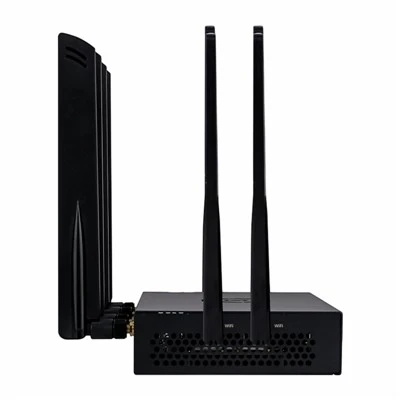
At the end of the day, smart home tech should make your life easier, not stress you out with dropped cameras or dead batteries. A lot of people get caught up in chasing the newest WiFi standard, but the best tool for the job is the one that works. Our WiFi4 ONU is built for most homes—no flashy specs, just solid performance. If you’re thinking about upgrading your smart home network, or just tired of your devices glitching every time you watch a video, reach out to our team to talk through your setup. We don’t do pushy sales pitches, just straight answers about what will work for your home.
WiFi 5 Router References:
- IEEE 802.11n Standard Overview (2009)
- Fiber Broadband Association: Smart Home Device Bandwidth Requirements Report (2023)
- Consumer Technology Association: Smart Home Battery Life Study (2022)
- WiFi Alliance: WPA2/WPA3 Security Deployment Data (2024)
- Our Internal Customer Survey (2023)
Shenzhen Youzhi Internet Technology Co., Ltd.
Shenzhen Youzhi Internet Technology Co., Ltd. is one of the most experienced wifi4 onu manufacturers and suppliers in China. With abundant experience, we are committed to providing high quality customized products with competitive price. Please rest assured to buy bulk advanced wifi4 onu made in China here from our factory. Welcome to contact us for pricelist and free sample.
Address: Room B3, 3rd Floor, Building D, Tongfang Information Park, No.11 Langshan Road, Xili Subdistrict, Nanshan District, Shenzhen City, Guangdong Province, PRC
E-mail: simon.cheng@viewsmart.cn
WebSite: https://www.vigorslink.com/
