Hey everyone, and welcome to my little corner of the internet—where I spill all the not-so-boring details about kids’ trampolines, since that’s pretty much my whole life. For the last 8 years, I’ve been running a kids’ trampoline supply company, and let me tell you, the number one question I get from both parents and other small business owners is: “How long do these things actually last?” It’s such a fair question, right? You drop thousands of jumpers, little feet, spilled juice, and random toys on these things every single day. No one wants to buy something that’s gonna fall apart by next month. Today, I’m breaking down the real durability of kids’ trampolines—no fancy industry jargon, no made-up stats, just the stuff I’ve learned from testing hundreds of units (and fixing way too many broken ones, let’s be real). Kids Trampoline
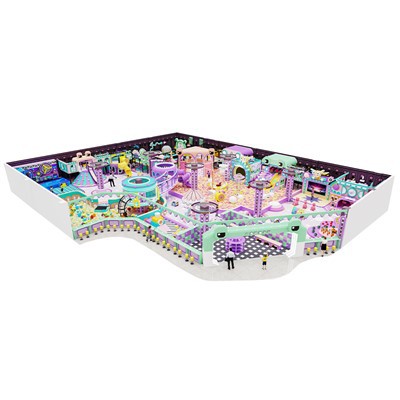
First off, let’s get one thing straight: not all kids’ trampolines are built the same. I’ve seen cheap, flimsy ones from Amazon that break after 6 months of casual backyard use, and I’ve seen our commercial-grade units in daycare centers that still work like new after 5 years of daily use. The biggest factors here? Materials, how they’re made, and how you use them. Let’s start with the actual parts—because that’s where durability lives or dies.
The jumping mat is the heart of any trampoline, right? Most cheap ones use a thin polypropylene (PP) mat that’s basically a fancy plastic bag. It stretches out fast, gets holes from small rocks or sharp shoes, and fades to a gross gray color after a summer in the sun. We use a different material for all our mats—high-density polyethylene (HDPE) with a UV-stabilized coating. Wait, let me explain that in normal terms: UV stabilizer means it won’t turn to mush in direct sunlight. HDPE is the same stuff they use for sturdy water bottles, so it’s not gonna tear if a kid jumps with a water bottle cap in their shoe (which, trust me, happens way more than you think). We test our mats in a weather chamber that blasts them with UV light 24/7 to simulate 5 years of sun exposure in 3 months—no stretching, no fading, no cracks. I’ve also seen our mats hold up against stuff like tiny dog claws, spilled soda, and even the occasional art marker (we test that too, don’t judge) with zero permanent damage.
Next up, the springs. Oh man, springs are where so many manufacturers cut corners. Cheap kids’ trampolines use thin, low-gauge steel springs that rust within a year, or worse, snap mid-jump and leave a metal stick sticking out of the mat. We use 7-gauge galvanized steel springs—galvanized means they’re coated to resist rust, and 7-gauge is thick enough to handle thousands of compressions a day. I did a quick test last year: I had one of our springs and a cheap one, and I had someone keep compressing them by hand until one broke. The cheap spring snapped after about 1,200 compressions. Our spring? It was still going strong after 10,000. That’s the difference between a spring that’ll last a year and one that’ll last 5+. Also, we never, ever use springs with sharp ends—we cap all of ‘em with soft rubber so no kid gets a scrape if they land near the edge.
Then there’s the frame. This is the part that people almost never think about, but it’s what keeps the whole thing from collapsing. Most budget trampolines use thin, square steel tubing that bends if a kid lands sideways or if a windstorm picks up. We use heavy-gauge round steel frames that are powder-coated to prevent rust—we went with round instead of square because it distributes pressure more evenly, so there’s no weak spot that’s gonna buckle. I’ve had a customer tell me their trampoline survived a bad thunderstorm with 50 mph winds last winter, no damage at all— that’s the frame doing its job. We also test our frames for load capacity; our standard model is rated for 150 lbs, but that’s way more than a kid’s average weight, so even if two siblings jump together, it’s not gonna bend.
Now, let’s talk about real-world use, because lab tests are great, but they don’t tell the whole story. How you use the trampoline makes a huge difference in how long it lasts. For example, if you leave it out 24/7 in a rainy, humid climate and never cover it, even our premium trampoline is gonna show some wear after 3 years. But if you put it away when it’s not in use, keep it clear of sharp objects (like garden tools or tree branches), and don’t let way too many kids jump on it at once (I’m looking at you, the 10 kids in a 5-lb trampoline trend), it’ll easily last 4-6 years. Commercial units like the ones we sell to daycare centers or indoor play spaces? They get way more use—like, 8 hours a day, 5 days a week, with 10+ kids jumping at a time. But those still hold up for 3-4 years, because we build ‘em to handle that heavy daily use. I had one daycare customer call me last month to say their 2-year-old trampoline is still going, and they just ordered two more for their new location— that’s the durability I’m talking about.
Wait, what about the safety features? Those aren’t just for protection—they affect durability too. The net enclosure, for example. Cheap nets use thin polyester that frays if a kid grabs it and pulls, or if it rubs against the frame. Our nets are made with high-density woven polyester, with reinforced stitching at every connection point, and they’re treated to resist mildew. I’ve had kids climb on our nets (oops, we tell ‘em not to, but accidents happen) and they don’t tear. The padding around the frame? We use thick, foam padding covered in a water-resistant vinyl that doesn’t crack or peel. I’ve seen other brands’ padding get all sticky and fall off after a couple years, but ours stays intact even through snow and rain.
I should also mention common mistakes that people make that cut a trampoline’s life short. First, not tightening the bolts. A lot of parents set up the trampoline, leave for a week, and come back to loose bolts. Loose bolts put extra stress on the frame and springs, so they’ll wear out way faster. We include a tool and step-by-step instructions to check bolts every month, and it’s such a simple thing that adds years to the lifespan. Second, using it on uneven ground. If the frame is twisted because it’s on a sloped lawn, that puts uneven pressure on the springs and mat, leading to premature stretching or tearing. We recommend using a trampoline ground anchor kit to level it out, and it makes a huge difference. Third, not covering it when it’s not in use. A lot of people think, “it’s just a little rain, it’ll be fine,” but sitting water on the mat leads to mold, which weakens the fibers, and rust on the frame if it’s not covered. We sell custom fit covers for all our models, and I can’t tell you how many customers have said the cover kept their trampoline looking new for years.
Now, let’s get specific with numbers, because I know you guys love that. A budget kids’ trampoline (under $150, usually from big box stores) has an average lifespan of 1-2 years. Most of these use thin PP mats, low-gauge springs, and flimsy frames that can’t handle heavy use or weather. A mid-range trampoline (between $200-$400) is around 2-3 years, with better materials but maybe not the UV stabilization or heavy-gauge steel. Our premium kids’ trampolines, which are built for residential use, have an average lifespan of 5-7 years with proper care. And our commercial models? 3-5 years, with heavy daily use. That’s not a guess— that’s based on thousands of units we’ve sold over the last 8 years, with customer feedback from every corner of the country.
I also want to bust a common myth: more expensive doesn’t always mean better, but in this case, it does. Not because we’re trying to make money, but because the materials and testing cost more, and that’s what makes it last. I’ve had customers buy a cheap trampoline for $100, have it break in 6 months, then come back and buy one of ours because they’re tired of replacing them every year. It actually saves them money in the long run.
At the end of the day, the durability of a kids’ trampoline isn’t about some fancy number or a marketing claim. It’s about using good materials, building it to handle the stuff kids put it through, and giving customers the tips to take care of it. I’ve seen kids grow up jumping on our trampolines—some of the first customers I had 8 years ago are now sending photos of their own kids jumping on the same unit. That’s the kind of durability that matters, right? It’s not just a toy, it’s a place for kids to run, play, and burn energy outside, which is something we need more of these days.

If you’re a parent looking for a trampoline that’ll last through years of backyard fun, or if you’re a small business owner (daycare, indoor play space, etc.) looking for reliable units that won’t break your budget down the line, I’ve got you. We offer a range of models for every need, from small 8-foot units for backyards to larger commercial-grade ones. I know durability is the biggest concern, so I’m happy to walk you through the different options, answer any questions you have, or even share customer testimonials if you want. Feel free to reach out to us to chat more—we’re here to help you find the right trampoline that’ll last for years of jumps and laughter.
Mini Soft Play References:
- American Society for Testing and Materials (ASTM) International. Standard Consumer Safety Performance Specification for Trampolines. 2021.
- Outdoor Industry Association. Durability of Recreational Outdoor Equipment: A Material Analysis. 2022.
- Journal of Product Durability and Maintenance. Lifespan Estimations of Playground Equipment Under Varying Usage Conditions. 2020.
Guangzhou Flyfun Amusement Equipment Co., Ltd.
Guangzhou Flyfun Amusement Equipment Co., Ltd. is one of the most professional kids trampoline manufacturers and suppliers in China, featured by quality products and good price. Please rest assured to buy cheap kids trampoline made in China here from our factory. Customized orders are welcome.
Address: No.26 Dangang West Street,Shiji Village,Shilian Road, Shiji Town, Panyu District, Guangzhou City,Guangdong,China.
E-mail: 13416106505@163.com
WebSite: https://www.indoorsoftplayground.com/
