Hey everyone, thanks for stopping by. If you’re running a pet treats production line, you know it’s not just about mixing ingredients or cutting shapes—you’ve got to nail every part of the facility to keep your product safe, your team happy, and your operation running smooth. Today I’m breaking down how to get proper ventilation right, especially since I spend all day working with production facilities just like yours (yeah, that’s right—I’m part of the pet treats production line supplier crew you might’ve seen around). This isn’t just some generic HVAC 101; it’s stuff we’ve tested and tweaked with dozens of treat makers, from small-batch jerky producers to mid-sized kibble treat lines. Let’s dive in. Pet Treats Production Line
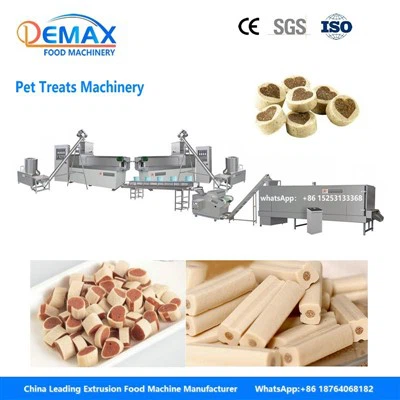
First off, let’s get real: pet treat facilities have weird, specific airflow problems you won’t find in an office or even a regular food plant. Think about it—you’re roasting chicken wings for dog treats, dehydrating sweet potatoes, toasting grain-based biscuits, or mixing strong-smelling supplements like salmon oil. All that stuff sends out moisture, fine dust, and volatile organic compounds (VOCs) that don’t just smell bad—they can mess with your product, your team’s health, and even your equipment if you ignore them. I’ve seen a line where no proper ventilation caused mold to grow in a hidden corner near the dehydrator, and that led to a recall. Not worth it, right?
So step one, map your hot spots before you buy any fans or ducts. I can’t tell you how many new clients call me saying, “We just put in a big exhaust fan but nothing’s better” and it’s because they pointed it at the wrong place. First, do a walkthrough with a notepad. Stand near each piece of equipment that runs for more than an hour at a time: the oven, dehydrator, mixer, packaging line, and even the raw ingredient storage area. For each spot, note what’s coming out—hot, humid air? Fine flour dust? Strong oil fumes? Also, check where doors and windows are, because that affects how air flows. For example, the dehydrator at my last client’s place was by a single back door, so when they opened it at shift change, all the moist air from the dehydrator just escaped out the door instead of being filtered. That was their big mistake. Pro tip: if you’re working with a supplier like mine, ask us to help you do a quick site walkthrough or send you a free spot-mapping checklist—we’ve got ’em, no pressure.
Next, pick the right type of ventilation for each spot, not a one-size-fits-all system. Let’s break down the main zones in a pet treat facility and what works for each.
First, the heat and moisture zone: ovens and dehydrators. This is the big one. When you’re baking chicken treats at 350°F for 45 minutes, you’re pumping out tons of water vapor and cooking smells. Regular exhaust fans that just blow air out won’t cut it here—you need something that pulls that air close to the equipment before it spreads. We recommend local exhaust hoods (the ones that sit right over the oven or dehydrator) with variable speed controls. Wait, variable speed? Yeah, because if you’re running a light batch of treats, you don’t need the fan at full blast, which saves energy. For example, a jerky dehydrator that runs 24/7 needs a hood that pulls 100-150 CFM per square foot of equipment surface, but if you’re running a small test batch, you can dial it down to 50 CFM to avoid wasting power. Also, make sure the hood has a baffle filter to catch any food particles before they get into the ductwork—clogged ducts are a fire hazard for ovens, trust me. I’ve had a client whose duct got clogged with chicken grease because they skipped the filter, and they had to shut down for three days to clean it. Not fun.
Then there’s the dust zone: mixers and dry ingredient areas. If you’re making treats that have flour, oat bran, or protein powders, those tiny particles float around and settle on everything—your mixers, your conveyor belts, even the finished treats. That dust is also a respiratory nightmare for your team, and some dusts (like grain or soy) can be flammable if it builds up enough. For mixers, we use slot exhausts that run along the top edge of the mixer’s opening, right where the ingredients are dumped. It pulls the dust down and out before it gets into the air. For storage areas for dry ingredients, don’t just put a box fan in the corner—use a low-level supply fan that pushes clean air in, and a high-level exhaust that pulls dust out. Because dust is lighter than air, it accumulates near the ceiling, so high exhausts catch it there.
Third zone: strong odors and fumes. If you’re using things like salmon oil, fish meal, or even certain preservatives, those fumes don’t just smell—they can make your team feel sick after a long shift, and they can even stick to finished treats if they spread to packaging areas. For these, you don’t just need to pull air out—you need to filter it first. We partner with a few filter brands that make carbon filters specifically for pet food odors, and we usually recommend a two-stage system: first a pre-filter to catch large particles, then a HEPA or carbon filter to get rid of fumes. One client used to have their packaging area right next to the mixing room, and the salmon oil fumes would stick to the new treat bags, making the finished product smell fishy even though it was fine. After we installed the filtered exhaust for the mixing area and a separate supply for the packaging room, that problem was gone. No more complaints from their wholesale clients about “off-smelling treats.”
Wait, don’t forget supply air! A lot of facilities only focus on pulling air out, which creates negative pressure. Negative pressure means outside air gets pulled through gaps around doors, windows, or even the equipment, and that air can have dust, pollen, or even pests (like mice or flies) from outside. That’s the last thing you want in a food facility. So you need to balance exhaust with supply air. The rule of thumb is that supply air should be 80-90% of your exhaust air—so you’re not pulling too much out. The supply air should also be filtered, so it’s clean before it comes into the facility. For smaller facilities, that might be a simple inline filter on a window AC unit or a dedicated supply fan; for larger lines, it’s part of your HVAC system with MERV 8 or MERV 11 filters (ask your supplier, we can explain the MERV numbers in plain English, no jargon).
Now, maintenance—this is the part no one talks about enough, but it’s make-or-break. I’ve seen facilities spend thousands on a fancy ventilation system, then skip changing filters or cleaning ducts, so it stops working after a year. Let’s make this simple: create a schedule, not a chore. For hood filters over ovens/dehydrators, check them every week—if they’re greasy, clean them (or replace them if they’re disposable). For dust filters on mixers, check them every two weeks. Carbon filters for odors? They only last 3-6 months, depending on how much you run the line, so mark your calendar to swap them. And every 6-12 months, hire a professional (or your supplier, if we offer that service) to come clean the ductwork. Grease and dust build up in ducts over time, and that’s a fire risk, plus it makes your ventilation less efficient. One client we work with does a “ventilation check” every month as part of their team’s daily shift huddle—they have a quick checklist: is the hood fan running? Is there dust on the mixer exhaust? That way, small problems get fixed before they become big ones.
Also, team training. Your operators are the ones around the equipment all day, so they’re the first to notice if something’s off—like the air feels stuffy, or there’s a weird smell, or dust is building up. We always tell our clients to train their team to not ignore those signs, and to speak up if something feels wrong. Last quarter, a line operator at a medium-sized treat facility noticed that the dehydrator hood wasn’t pulling as hard as usual, so they checked the filter and it was clogged with flour, which had backed up into the duct. They swapped the filter in 10 minutes, no downtime, no lost product. If they’d ignored it, the next batch would’ve had extra dust, or even a fire risk. Training doesn’t have to be long—15 minutes every month to go over ventilation basics goes a long way.
Wait, what about small facilities vs. large ones? Let’s address that, because not everyone’s running a 10,000 sq ft plant. If you’re a small-batch producer with a single oven and a small mixer, you don’t need a whole industrial HVAC system. We’ve worked with home-based treat makers that upgraded to a $200 portable exhaust hood over their countertop oven, paired with a cheap inline duct fan that vents out a window. It’s not as fancy as a commercial system, but it fixes the biggest problems: no more smoke fumes in the house, no more flour dust settling on their kitchen. For mid-sized lines, modular systems work great—you can add a hood here, a slot exhaust there, as you grow. We build our pet treat line equipment with ventilation in mind, so all our lines are designed to work with specific exhaust and supply setups, so you don’t have to customize a random fan.
Now, let’s cover common mistakes we see all the time. Number one: putting the exhaust fan too far from the source. If your oven is 3 feet away from the hood, the air spreads all over the room before it gets pulled out. Number two: skipping filters. Like I said before, clogged filters or no filters lead to dirty ducts, fire risks, and poor airflow. Number three: not balancing exhaust and supply. Negative pressure means pests or dirty air come in from outside. Number four: forgetting the raw ingredient storage. That stuff can mold if it’s too humid, so make sure the storage area has its own little ventilation too—maybe a small dehumidifier paired with an exhaust fan, so your flour and chicken meal stay dry.
Here’s the thing: proper ventilation isn’t just a “nice to have.” It protects your product (no mold, no off-flavors, no contamination), keeps your team healthy (less asthma from dust, no headaches from fumes), keeps your equipment running longer (less grease and dust buildup), and keeps you from getting costly recalls or downtime. I’ve seen so many pet treat businesses fail because they cut corners on ventilation, and it’s avoidable.

If you’re in the market for a new pet treats production line, or you just want to upgrade your current facility’s ventilation, hit me up. We don’t do pushy sales—we’ll come look at your space, tell you exactly what you need, no extra junk you don’t want. Just send a message to set up a chat, and we can work through it together. That’s what we do, right? We’re here to help you make safe, great treats for pets, and good ventilation is a huge part of that.
Single Screw Extruder References:
- National Food Safety Foundation. (2022). Ventilation Guidelines for Small-Scale Food Production Facilities.
- Pet Food and Feed Association. (2021). Occupational Health and Safety Standards for Pet Treat Manufacturing Operations.
- U.S. Occupational Safety and Health Administration (OSHA). (2020). Ventilation Requirements for Industrial Food Processing Equipment.
- American Society of Heating, Refrigerating and Air-Conditioning Engineers (ASHRAE). (2021). Ventilation for Acceptable Indoor Air Quality in Food Processing Facilities.
- International Association of Food Protection (IAFP). (2023). Preventing Contamination in Dry Ingredient Storage Areas Through Airflow Management.
Jinan Demax Machinery Co., Ltd.
With abundant experience, we are one of the most professional pet treats production line manufacturers and suppliers in China. Please rest assured to buy durable pet treats production line made in China here from our factory. For price consultation, contact us.
Address: Room 502, Building 3, Xiangtai Plaza, No. 129 Yingxiongshan Road, Shizhong District, Jinan City, Shandong Province
E-mail: info@seo.com.cn
WebSite: https://www.demaxfoodmachine.com/
