When it comes to the plastic storage bins we supply, accurately measuring their volume is crucial for both our customers and our business operations. In this blog, I’ll explore the best ways to measure the volume of plastic storage bins, which can help our clients make informed decisions and ensure they get the right products for their needs. Plastic Storage Bins

Why Measuring Volume is Important
Before delving into the measurement methods, it’s essential to understand why measuring the volume of plastic storage bins matters. For customers, knowing the exact volume helps them determine if the bin can hold their intended items, whether it’s clothes, tools, or seasonal decorations. For us as a supplier, accurate volume measurements ensure that our product descriptions are reliable, which builds trust with our customers and reduces the likelihood of returns due to mismatched expectations.
Basic Geometric Shapes
Most of the plastic storage bins we offer are in basic geometric shapes such as rectangular prisms, cubes, and cylinders. Each shape has a specific formula for calculating volume, and these formulas are the foundation of our measurement process.
Rectangular Prisms and Cubes
Rectangular prisms and cubes are the most common shapes for our plastic storage bins. A cube is a special type of rectangular prism where all sides are equal.
The formula for the volume of a rectangular prism is (V = l\times w\times h), where (l) is the length, (w) is the width, and (h) is the height. For a cube, since (l = w = h), the formula simplifies to (V = s^3), where (s) represents the length of one side.
To measure the volume of a rectangular prism or cube-shaped bin, we use a measuring tape or a ruler. First, we measure the length, width, and height of the interior of the bin. It’s important to measure the interior dimensions because that’s the actual space available for storage. After obtaining the measurements, we simply plug them into the appropriate formula to calculate the volume.
For example, if a rectangular storage bin has an interior length of 50 cm, a width of 30 cm, and a height of 20 cm, the volume (V=50\times30\times20 = 30000\text{ cm}^3). Since 1 liter is equal to 1000 (\text{cm}^3), the volume of this bin is 30 liters.
Cylinders
Cylindrical plastic storage bins are also popular, especially for storing liquids or long, thin items. The formula for the volume of a cylinder is (V=\pi r^2h), where (r) is the radius of the base and (h) is the height.
To measure the volume of a cylindrical bin, we first measure the diameter of the base using a measuring tape. The radius (r) is half of the diameter. Then we measure the height of the interior of the bin. After obtaining (r) and (h), we can calculate the volume using the formula.
For instance, if a cylindrical bin has a diameter of 40 cm (so the radius (r = 20) cm) and a height of 60 cm, the volume (V=\pi\times(20)^2\times60= \pi\times400\times60 = 24000\pi\text{ cm}^3\approx 75398.22\text{ cm}^3), which is approximately 75.4 liters.
Irregularly Shaped Bins
Not all of our plastic storage bins have simple geometric shapes. Some may have curved sides, irregular compartments, or unique designs. Measuring the volume of these bins is more challenging, but there are still effective methods.
Water Displacement Method
The water displacement method is a classic way to measure the volume of irregularly shaped objects. To use this method for our plastic storage bins, we need a large container that can fully submerge the bin.
First, we fill the large container with water to a certain level and mark the water level. Then we carefully submerge the plastic storage bin into the water, making sure no air bubbles are trapped inside. The water level will rise, and we mark the new water level. The volume of the bin is equal to the volume of water displaced.
We can measure the volume of the displaced water by using a graduated cylinder or by calculating the volume of the water in the large container based on its shape. For example, if the large container is a rectangular prism, we can measure the change in the water level and multiply it by the base area of the container to get the volume of the displaced water, which is the volume of the bin.
However, this method has some limitations. It requires a large amount of water and a container big enough to submerge the bin. Also, it may not be suitable for bins that are not waterproof or that can be damaged by water.
3D Scanning and Modeling
In recent years, 3D scanning and modeling technology has become more accessible and affordable. This technology can be used to measure the volume of irregularly shaped plastic storage bins with high precision.
We can use a 3D scanner to create a digital model of the bin. The scanner captures the shape and dimensions of the bin from multiple angles, and then software processes the data to create a 3D model. Once the model is created, the software can calculate the volume of the bin based on the digital representation.
The advantage of 3D scanning and modeling is that it can provide accurate volume measurements without the need for physical contact or water. It can also handle complex shapes that are difficult to measure using traditional methods. However, the equipment and software for 3D scanning and modeling can be expensive, and it requires some technical expertise to operate.
Considerations for Accurate Measurement
When measuring the volume of plastic storage bins, there are several factors to consider to ensure accurate results.
Wall Thickness
The wall thickness of the plastic bin can affect the interior volume. When measuring the dimensions for volume calculation, we need to measure the interior dimensions rather than the exterior dimensions. If the wall thickness is significant, it can reduce the available storage space.
Compartments and Dividers
Some of our plastic storage bins come with compartments and dividers. When measuring the volume, we need to consider whether the compartments are separate or connected. If they are separate, we may need to measure the volume of each compartment individually and then sum them up.
Rounded Edges and Corners
In real-world plastic storage bins, the edges and corners are often rounded. When using the geometric formulas for rectangular prisms or cubes, we need to make an approximation. For most practical purposes, the error introduced by rounding is negligible, but in some cases, more precise measurement methods may be required.
Importance of Accurate Volume Information for Customers
Providing accurate volume information is essential for our customers. It helps them make the right purchasing decisions. For example, a customer who needs to store a large number of winter clothes may choose a bin with a larger volume. On the other hand, a customer who only needs to store a few small items may opt for a smaller bin.
Accurate volume information also allows customers to compare different products from our catalog. They can easily see which bin offers more storage space for their money. This transparency builds trust and loyalty with our customers, which is crucial for the long-term success of our business.
How We Ensure Accurate Volume Measurements
As a plastic storage bin supplier, we are committed to providing accurate volume information for our products. We have a quality control team that is responsible for measuring the volume of each type of bin. They use calibrated measuring tools and follow strict measurement procedures to ensure accuracy.
For irregularly shaped bins, we may use a combination of methods, such as water displacement and 3D scanning, to cross – check the volume measurements. We also regularly update our measurement techniques to keep up with the latest technological advancements.
Conclusion
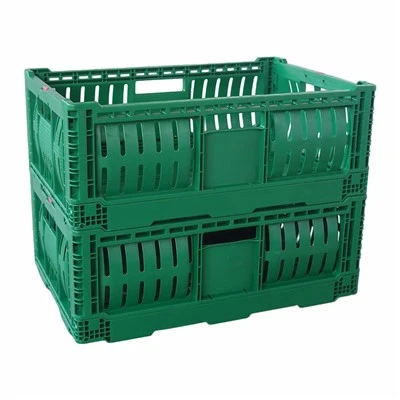
Measuring the volume of plastic storage bins is a complex but important task. By using the appropriate methods for different shapes and considering various factors, we can provide accurate volume information to our customers. This helps them make informed decisions and ensures that they are satisfied with their purchases.
Plastic Storage Bins If you are interested in our plastic storage bins and need more detailed information about their volume or other features, please feel free to contact us. We are always ready to assist you in finding the perfect storage solution for your needs.
References
- Hall, D. (2018). Engineering Drawing and Design. Oxford University Press.
- Young, H. D., & Freedman, R. A. (2016). University Physics with Modern Physics. Pearson.
Ningbo Simple Trading Co., Ltd.
Ningbo Simple Trading Co., Ltd. is one of the most professional plastic storage bins manufacturers and suppliers in China. With a professional production team, we are able to meet the needs of the majority of our customers. Please feel free to wholesale custom made plastic storage bins from our factory.
Address: Room 3136, North Building of Yinzhou Chamber of Commerce Building, No.1299, Yinxian Boulevard, Shounan Subdistrict, Yinzhou District, Ningbo City, Zhejiang Province
E-mail: Simpleexport@nbsimpletrading.com
WebSite: https://www.logisticsequipments.com/
