If you’ve ever stood beside a railway track as a train rumbled past, the steady click of wheels on rails masking the faint hum of infrastructure designed to keep that journey safe, you might have wondered what goes on in the hidden spaces that tie signaling systems together. As a supplier specializing in railway signal junction boxes, I’ve spent years in the field, walking trackside with engineers, troubleshooting wiring issues at 2 a.m. on a remote line, and answering the same question from new rail operators, interns, and even curious rail fans: What’s the real purpose of a junction box here, beyond just being a metal box on a post? Signal Junction Box
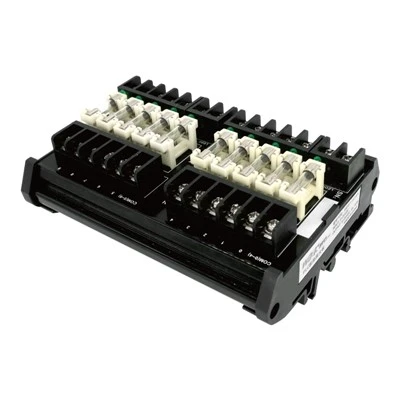
Let me start with a story that drove home why these unassuming parts matter. A few years back, I was on a call with a regional rail operator whose line had been out of service for 12 hours due to a signaling fault. The team traced the issue to a loose wire between a track circuit sensor and a signal head—wires that ran 1.2 miles through weathered conduit, snaked through cuttings, and crossed a small stream. When they opened the faulty junction box, they found water had seeped in, corroded a connection, and triggered a false signal. The problem wasn’t the box itself, but how they’d skipped regular inspections of the junction, which would have let them catch the corrosion before it shut down the line. That moment stuck with me: junction boxes aren’t just passive containers. They’re the nervous system’s junctions, and every part of their design serves a purpose that keeps railways running safely and reliably.
First, let’s break down the basics of railway signaling to set context. Modern signaling systems don’t rely on semaphores or hand signals anymore—instead, they use a web of interconnected components: track circuits that detect trains by measuring electrical resistance along the rails, signal heads that display red/yellow/green for drivers, axle counters that count train axles to monitor occupancy, and relays that route power to each part of the system. All these components run on low-voltage DC power (usually 12V to 48V, depending on the system) and send small electrical signals to communicate. Wires that run from a track sensor to a signal head, or between two relay cabinets, can be hundreds of feet long, exposed to sun, rain, ice, dust, and even wildlife. If you just splice two wires together in the open, you’re leaving a connection vulnerable to corrosion, physical damage, or accidental contact with other wiring. That’s where junction boxes enter the picture.
The core purpose, at its simplest, is to protect and organize electrical connections. But it’s not just about shoving wires into a enclosure. Railway junction boxes are engineered for the harsh trackside environment—think IP67 or higher ingress protection, rust-resistant galvanized steel or aluminum enclosures, and internal terminals designed to prevent loose connections from vibration (a huge issue on moving tracks). Unlike standard electrical junction boxes used in buildings, railway signal junction boxes are built to handle temperature swings from -40°F in northern Canada to 120°F in the desert Southwest, and to resist damage from minor impacts, rodent chewing, and even exposure to chemicals used in track maintenance. A bad connection is a silent risk: a loose wire can cause a signal to fail red (stranding trains) or fail green (a catastrophic safety hazard, since drivers would have no warning of an oncoming train or a closed track). Junction boxes eliminate that risk by housing splices and terminals in a sealed, controlled space, and by providing a standardized way to wire components without exposing live connections.
But there’s more to their purpose than physical protection. They streamline maintenance and troubleshooting, which is critical for railways that can’t afford to shut down lines for hours just to fix a small issue. Imagine if every track sensor connected directly to a signal head, with no junction box—an engineer would have to trace a 1-mile wire through conduit, under track beds, and across bridges to find a loose connection. With a junction box placed at a convenient midpoint, or near both components, the engineer can open the box, test the connections in minutes, and replace a faulty terminal or a length of wire without digging up half the track. For operators managing dozens or hundreds of miles of line, this reduces downtime, cuts maintenance costs, and keeps service running on schedule—something that’s non-negotiable for commuter lines that carry 100,000 passengers a day or freight lines that move essential goods like food and medicine.
Another often-overlooked purpose is system modularity. Railway signaling systems aren’t one-size-fits-all. A junction box can serve as a junction between two track circuits, or as a tap point to add a new signal head to an existing line, or as a hub for a small group of sensors in a yard. Modular junction boxes let operators expand or modify their systems without rewiring entire segments of track. For example, if a rural line adds a new passing loop, the engineer can run a few extra wires from the existing relay cabinet to a junction box near the loop, then connect the new track circuit sensor and signal head to that box—no need to pull new cable all the way back to the main cabinet. This flexibility cuts installation time and costs, making it easier for small regional rail operators to upgrade their signaling without a massive capital outlay.
Safety is, of course, the top priority, and junction boxes play a quiet, critical role here too. Railway signaling systems rely on “fail-safe” design, meaning if any component fails, it defaults to a safe state (usually a red signal). Junction boxes support this by ensuring that connections stay intact and that live electrical signals don’t interfere with each other. Sealed junction boxes prevent water or dust from causing short circuits, which could trigger a signal to fail in an unsafe state. They also provide a clear labeling point for technicians, with standardized terminal markings that make it easy to trace which wire connects to which component—something that’s life-saving when a train is stuck on a remote line in the middle of the night. In some cases, junction boxes are even fitted with surge protection devices to guard against power surges from lightning, which can destroy sensitive signaling components and cause widespread disruptions.
Now, let’s talk about common misconceptions. Some people think junction boxes are a simple afterthought, something that’s just there to cover wires. I’ve seen operators cut costs by using generic electrical junction boxes instead of railway-specific ones, and the results are predictable: within a year, the boxes rust, water gets in, and connections fail. Generic boxes aren’t built to handle the vibration of trackside environments, the temperature extremes, or the required ingress protection. A railway signal junction box has to meet strict industry standards—like those set by the American Railway Engineering and Maintenance-of-Way Association (AREMA) or the International Union of Railways (UIC)—that specify everything from enclosure thickness to terminal durability. For example, a UIC-compliant junction box must be able to withstand a 1-meter drop onto concrete without cracking, and its terminals must resist corrosion for at least 10 years in outdoor environments. That’s not the kind of performance you get from a standard $20 junction box from a hardware store.
As a supplier, I work with operators every day to pick the right junction box for their specific needs. A commuter line in a dense urban area might need a smaller, low-profile junction box that doesn’t stick out and get hit by maintenance vehicles, while a freight line in the mountains might need a larger box with extra surge protection to handle lightning strikes. A railway’s signaling system type also matters: analog systems might use simpler terminal junction boxes, while modern digital signaling systems need junction boxes that can handle high-speed data signals without interference. It’s not a one-size-fits-all decision, and that’s why taking the time to consult with a specialist (like our team) can save operators a lot of headaches down the line.
Let’s circle back to that 2019 fault I mentioned earlier. After that incident, the operator updated their maintenance schedule to include quarterly inspections of all junction boxes, and they switched from generic boxes to AREMA-compliant railway junction boxes. They reduced signaling faults from 12 a month to 2, and their downtime dropped by 85%. That’s the impact of getting something as small as a junction box right. It’s not the flashy signal head or the fancy relay cabinet that keeps trains safe—it’s the unassuming box that holds all the connections together, protects them from the elements, and makes it easy to fix things when they go wrong.
If you’re a railway operator, a maintenance manager, or someone working on a signaling project, don’t overlook the role of the junction box. It’s a small component, but it’s the backbone of your signaling system. If you’re looking to upgrade your junction boxes, replace faulty units, or design a new system, our team has the expertise to help you find the right solution for your needs. We build junction boxes that meet strict industry standards, are built to last in even the harshest environments, and are designed to make maintenance and troubleshooting as easy as possible.

To learn more about how our signal junction boxes can support your railway’s safety and reliability, feel free to reach out to our team for a procurement consultation. We’ll walk through your specific needs, explain the best options for your line, and help you build a system that works for years to come.
Spring Terminal Block References
AREMA Manual for Railway Engineering, Volume 5: Signaling and Telecommunications
UIC 553-2: Railway Signaling Systems – Junction Boxes for Trackside Applications
Railway Safety and Standards Board (RSSB): Signaling Component Reliability Report, 2022
Zhejiang Weide Electric Co., Ltd.
Zhejiang Weide Electric Co., Ltd. is one of the most professional signal junction box manufacturers and suppliers in China, featured by quality products and low price. If you’re going to buy the newest signal junction box, welcome to get free sample from our factory. We also accept customized orders.
Address: No.555, South Binhe 2nd Road, Yueqing City, Zhejiang Province, China
E-mail: zjwdir@wdirele.com
WebSite: https://www.chweide.com/
