If you’ve ever walked down a grocery aisle, a trade show floor, or a big-box retail store, chances are you’ve stopped at a cardboard floor display stand without even noticing it. Those tall, sturdy cardboard structures holding snack samples, new skincare lines, or limited-edition apparel are more than just marketing eye candy—they’re a low-cost, flexible way for brands to reach shoppers exactly where they make their buying decisions. As a supplier of these stands, I get asked one question almost every day: “How much does a cardboard floor display stand cost?” The answer isn’t a single number, though. It depends on a dozen small, specific choices you make when designing and ordering your stand. Let me break down what goes into that pricing, so you don’t end up overpaying for something that doesn’t fit your needs, or settling for a cheap stand that falls apart before your promotion ends. Cardboard Floor Display Stand

First, let’s start with the basics: material grade. Cardboard floor displays aren’t all the same. The most common grade used for retail is 200 to 400-point corrugated board. Think of corrugated as having three layers: two flat outer liners and a wavy inner corrugation that gives it strength. The higher the point number, the thicker and sturdier the board. A 200-point stand works for light items like candy bars or small sticker packs; it’s thin enough to be lightweight and easy to ship, but too flimsy for 10-pound product loads, which are common for things like canned soda or books. For heavy items, we use 350 or 400-point board, which adds about $0.20 to $0.50 per square foot of material. That might not sound like much, but if you’re ordering 1,000 stands, that extra $0.30 per square foot adds up to $300 total—worth it if you don’t want your display collapsing mid-promotion. I once had a client who tried to save $200 by going with 250-point board for canned soup; 12 of their first 50 displays broke during unloading, and they ended up spending double to replace them. Always test your product weight when choosing material grade.
Next, size and design complexity. The size of your stand is the biggest driver of cost, plain and simple. A small, 2-foot tall countertop adjacent floor stand (used for impulse items near checkout) will cost less than a 6-foot tall full-size stand meant to hold endcaps at the entrance of a store. But it’s not just height—design features add up too. For example, a simple, straight-sided stand with no extra pockets or cutouts costs about 15% less than a stand with built-in product holders, hooks, or header boards to display your logo. If you want a window cutout so shoppers can see the product inside, that adds a few dollars per unit, because we have to custom-cut the corrugated board, which requires extra labor and waste. Then there’s assembly: flat-pack stands, which ship unassembled and require the retailer to put them together, are cheaper than pre-assembled stands. Pre-assembled stands cost 20-25% more, but they’re ready to go as soon as they arrive—great for trade shows where you don’t have time to build displays onsite. I always tell trade show clients to spring for pre-assembled; last year, a client tried to assemble 20 stands in a hotel room, and half of them had misaligned folds that made them look unprofessional. When in-person time or labor is tight, the extra cost is worth it.
Printing is another big variable. Most brands want their logo, product images, and promotional text printed directly on the cardboard stand, and that’s where costs can swing wildly. The cheapest option is flexographic (flexo) printing, which uses large plates to print up to six colors at once. It’s efficient for large orders, and you can get a full-color stand printed for as little as $0.75 per unit, depending on size. The downside is that flexo printing has slightly less vibrancy than other methods, and you’re limited to solid colors or simple gradients. If you want detailed photos, custom illustrations, or a multi-gradient background, you’ll need offset or digital printing. Digital printing is best for small orders (fewer than 500 units) because you don’t have to pay for custom plates, which can cost $100-$300 just to set up. For a 500-unit order, digital printing adds about $0.50 per unit compared to flexo. Offset printing, meanwhile, is the best for large orders (1,000+ units) because it’s the most color-accurate, but it requires higher setup costs—often $500-$1,000, depending on your design. A brand that printed a limited-edition holiday display last year chose offset for 1,500 units, and their vibrant red and gold foil details made the stand stand out against all the plain black and white displays nearby. That setup cost saved them from having to reprint dull, low-quality flexo stands that would have gotten ignored. Just remember: if you’re only ordering 100 stands, digital printing is your best bet—offset will make the total cost way too high for that small a quantity.
Order volume also plays a huge role. Like most manufacturing, cardboard displays are cheaper when you order more. The break-even point for volume is around 500 units, roughly: a 100-unit order will cost 20-30% more per unit than a 1,000-unit order. Why? Because the machine setup, material cutting, and printing setup costs are spread over fewer units when you order small. I’ve had clients call in panic because they only need 200 stands for a pop-up shop, and they’re shocked when the per-unit price is twice as much as the quote I gave them for a 1,000-unit order. On the flip side, a 5,000-unit bulk order is even cheaper—we can often offer a 10-15% discount because we’re using bulk material and streamlined production runs. That said, don’t order more than you’ll use just to save money. Cardboard displays are single-use for most retail promotions, and storing 5,000 stands in a warehouse is an extra cost you might not have budgeted for. I’d rather a client order 300 stands than 1,000 just to get a lower per-unit price, if they only need 300. That extra 700 stands won’t do you any good if they’re gathering dust in a back room.
Now, let’s talk about hidden costs that many first-time buyers overlook. First, shipping: flat-pack stands are lightweight, so shipping costs are usually $0.20-$0.50 per unit, but pre-assembled stands are bulky and heavy, so shipping can double or triple the total cost. I always include shipping in initial quotes so there are no surprises. Then there’s optional extras: things like a baseweight strip to make the stand more stable (great for tall stands that might tip over, adds $0.10-$0.20 per unit), carry handles for portable stands, or adhesive strips to mount the stand to the store’s floor (required by some retailers, adds another $0.15 per unit). Also, custom artwork adjustments: if you send a low-resolution logo or a design that doesn’t fit the corrugated board’s cut, we might have to edit your art for free, but major design changes after the initial quote can add $100-$500 to your order. I always make sure to review artwork for compatibility before starting production, so you don’t get hit with unexpected fees. And don’t forget turnaround time: if you need stands in 3 days instead of the standard 10, we can do it, but that requires rushing the production line, which adds 20-30% to the total cost. Rushing fees are common, but they’re worth it only if your promotion is time-sensitive.
Let me give you real pricing examples to make this concrete. A small, 2-foot tall, 250-point corrugated stand, flexo printed, flat-pack, 500-unit order: that comes out to about $2.00 per unit, plus $0.30 per unit for shipping, total around $1,150 for 500. A medium, 4-foot tall, 300-point stand with built-in product hooks, offset printed, pre-assembled, 1,000-unit order: that’s about $3.50 per unit, plus $0.50 per unit for shipping, total around $4,000 for 1,000. A large, 6-foot tall, 400-point stand for heavy products (like canned goods), digital printed, flat-pack, 200-unit order: that’s about $5.50 per unit, plus $0.40 per unit for shipping, total around $1,180 for 200. These are all realistic numbers I’ve quoted to clients in the last year, and they align with what other reputable cardboard display suppliers charge.
Wait, but is there a way to get a cheap cardboard display without sacrificing quality? Yes, but only if you’re flexible. Stick to standard sizes and materials—custom shapes (like a round stand instead of a square) add $0.50-$1 per unit because they require custom cutting dies. If you don’t need foil stamping, special inks, or window cutouts, that’s where you’ll save the most. Also, ordering flat-pack instead of pre-assembled cuts costs without hurting functionality, as long as the retailer has space to store and assemble the stands. I’ve had clients save 25% just by choosing flat-pack over pre-assembled, and their retailers didn’t mind putting the stands together. The key is to prioritize what matters most: if you need a stand that holds 10 pounds of product, don’t skimp on material grade to save a dollar per unit. If you’re on a tight budget, cut out extra design features instead of dropping to a lower material grade.
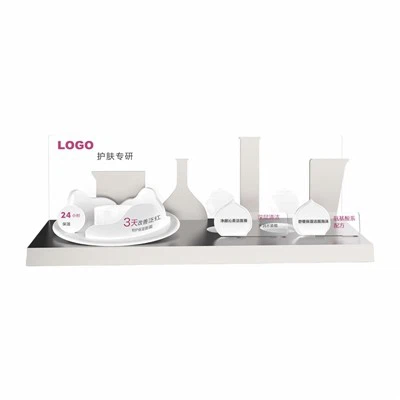
A common mistake I see is brands thinking “cheaper is better” when it comes to cardboard displays. I once had a client from a fast-fashion brand order 1,000 stands from a low-cost supplier for a back-to-school promotion. The stands were only 150-point corrugated, so when they filled them with hoodies, half the stands collapsed on the sales floor. The brand had to send extra staff to restock and prop up the broken stands, and they lost out on impulse sales because the displays looked unprofessional. That low-cost order ended up costing them 3x more than a medium-priced, sturdy stand would have. So when you’re getting quotes, don’t just look at the bottom line. Ask for the material grade, printing method, and whether the stand can support your product weight. A slightly higher upfront cost can save you from headaches and lost sales later.
Cardboard Countertop Display If you’re ready to get a quote for your cardboard floor display stand, or you want to brainstorm a design that fits your budget, reach out to me directly. I’ll walk you through every part of the process, from material selection to printing to shipping, so you know exactly what you’re paying for. Don’t waste time guessing how much your stand will cost—let’s build a display that works for your promotion, your budget, and your brand.
- Retail Advertising: Principles and Practice, 5th Edition, by Jane Greco
- Corrugated Packaging Handbook, 2nd Edition, by Robert D. Schaffner
- Point-of-Purchase Advertising: Design and Effectiveness, by Marian L. Carney
- The Small Business Guide to Point-of-Sale Displays, by Thomas C. Stevens
- Corrugated Board Manufacturing and Converting, by John T. Lynch
Guangzhou Guangjie Display Products Manufacturing Co., Ltd.
We’re well-known as one of the leading cardboard floor display stand manufacturers in China, also support customized service. Welcome to buy bulk high quality cardboard floor display stand at competitive price from our factory. If you have any enquiry about pricelist and quotation, please feel free to email us.
Address: No. 16-1 Lilv Road, Dashi Street, Panyu District, Guangzhou City, Guangdong Province
E-mail: guangjie_dp888@163.com
WebSite: https://www.gjdisplaystand.com/
