Hey there! As a supplier of RF Remotes, I’ve been getting a bunch of questions lately about how these little gadgets work, especially when it comes to signal propagation. So, I thought I’d sit down and write a blog post to break it all down for you. RF Remote
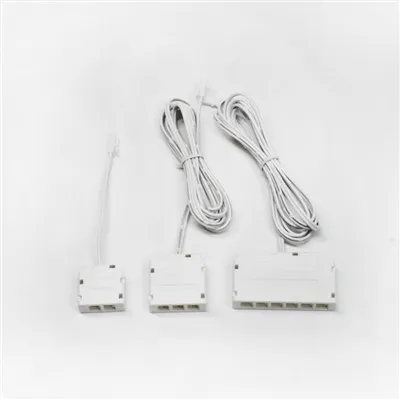
Let’s start with the basics. What exactly is an RF Remote? Well, RF stands for Radio Frequency. An RF Remote is a device that uses radio waves to send signals to a receiver, which can then control a specific device. It’s different from an infrared (IR) remote, which uses infrared light to transmit signals. RF Remotes have a few advantages, like being able to work through walls and having a longer range.
Now, let’s dig into the signal propagation part. Signal propagation is all about how the radio signals from the RF Remote travel through the air to reach the receiver. There are a few key factors that can affect this process.
First up, we’ve got the frequency. RF Remotes operate on different frequencies, and the frequency can have a big impact on how the signal travels. Higher frequencies, like those in the GHz range, tend to have a shorter range but can carry more data. Lower frequencies, on the other hand, can travel further but may have a lower data – carrying capacity.
For example, many of the RF Remotes we supply operate in the 315 MHz or 433 MHz frequency bands. These frequencies are popular because they offer a good balance between range and data transfer. They can travel through walls and other obstacles relatively well, which is great for home and industrial applications.
Another important factor is the power of the signal. The stronger the signal sent by the RF Remote, the further it can travel. But there are limits to how much power we can use. In many countries, there are regulations on the maximum power output of RF devices to prevent interference with other radio signals. So, as a supplier, we have to make sure our RF Remotes comply with these regulations while still providing a strong enough signal for practical use.
The environment also plays a huge role in signal propagation. If there are a lot of obstacles in the way, like metal objects or thick walls, the signal can be absorbed, reflected, or scattered. Metal is particularly bad for RF signals because it can block them completely. For instance, if you try to use an RF Remote from inside a metal cabinet, the signal may not reach the receiver at all.
On the other hand, open spaces are ideal for signal propagation. In an open field, an RF Remote can work at its maximum range. But in a cluttered office or a house full of furniture and appliances, the range can be significantly reduced.
The antenna design is another crucial aspect. The antenna on the RF Remote and the receiver are responsible for sending and receiving the radio signals. A well – designed antenna can enhance the signal strength and directionality. For example, a directional antenna can focus the signal in a specific direction, which can be useful in some applications. But most of our RF Remotes come with omnidirectional antennas, which send the signal in all directions. This is great for general use, as it means you don’t have to point the remote directly at the receiver.
Now, let’s talk about how the signal is modulated. Modulation is the process of encoding information onto the radio signal. There are different types of modulation, but two of the most common ones for RF Remotes are Amplitude Shift Keying (ASK) and Frequency Shift Keying (FSK).
ASK modulates the amplitude of the carrier signal to represent binary data. It’s a simple and inexpensive method, and it works well for low – speed data transfer. FSK, on the other hand, modulates the frequency of the carrier signal. It’s more robust and can handle higher data rates, but it’s also a bit more complex and expensive.
As a supplier, we offer RF Remotes with both ASK and FSK modulation, depending on the customer’s needs. If you just need a basic remote to turn a device on and off, an ASK – modulated remote may be sufficient. But if you need to send more complex commands or data, an FSK – modulated remote would be a better choice.
When it comes to the receiver side, it has to be able to demodulate the signal correctly. The receiver is designed to pick up the specific frequency and modulation type used by the RF Remote. It then decodes the signal and sends the appropriate commands to the device it’s controlling.
In some cases, we may also use a protocol to ensure the reliability of the signal. A protocol is a set of rules that govern how the data is transmitted and received. For example, we might use a simple acknowledgment protocol, where the receiver sends a signal back to the remote to confirm that it has received the command. This helps to prevent data loss and ensures that the device is controlled accurately.
So, there you have it! That’s a basic overview of the signal propagation of an RF Remote. As a supplier, we’re always working on improving our products to make the signal propagation more efficient and reliable. We test our RF Remotes in different environments to make sure they can perform well in real – world situations.
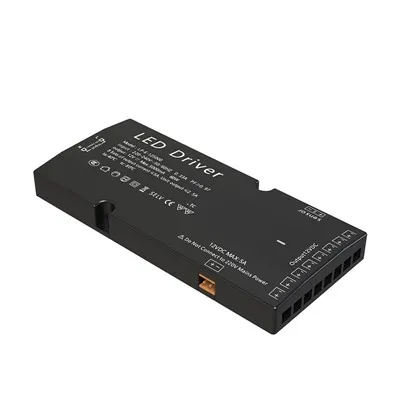
If you’re in the market for an RF Remote, whether it’s for home use, industrial applications, or anything in between, we’d love to talk to you. We can offer a wide range of RF Remotes with different features, frequencies, modulation types, and antenna designs to meet your specific needs. Just get in touch with us, and we can start a discussion about your requirements. We’re confident that we can provide you with the best RF Remote solution at a great price.
Cabinet LED Driver References:
- "Radio Frequency Engineering" by Chris Bowick
- "Wireless Communication Systems" by John G. Proakis and Masoud Salehi
Dongguan Lanbaoli Intelligent Technology Co., Ltd.
As one of the most professional rf remote manufacturers and suppliers in China, we’re featured by quality products and low price. Welcome to buy advanced rf remote for sale here from our factory. If you have any enquiry about quotation, please feel free to email us.
Address: 10th Floor, Building 32, Golden Town, No. 7 Technology Avenue, Houjie Town, Dongguan City, Guangdong Province
E-mail: anna@lampow.cn
WebSite: https://www.lblsensor.com/
